


Eyes should see, ears should hear, and the nose should smell. You have to walk without making a single sound when entering animal territory. Our guide told us this right before we stepped into the shola forests of Ooty.
Access to Parson Valley and the surrounding Nilgiris is strictly regulated to protect the local biodiversity. So when Bangalore Mountaineering Club opened slots for this trek, I registered for it without a second thought.
We left Bangalore for Ooty around 9pm on Friday. The weather app predicted rain but Google being Google warned us of flash floods and thunderstorms.
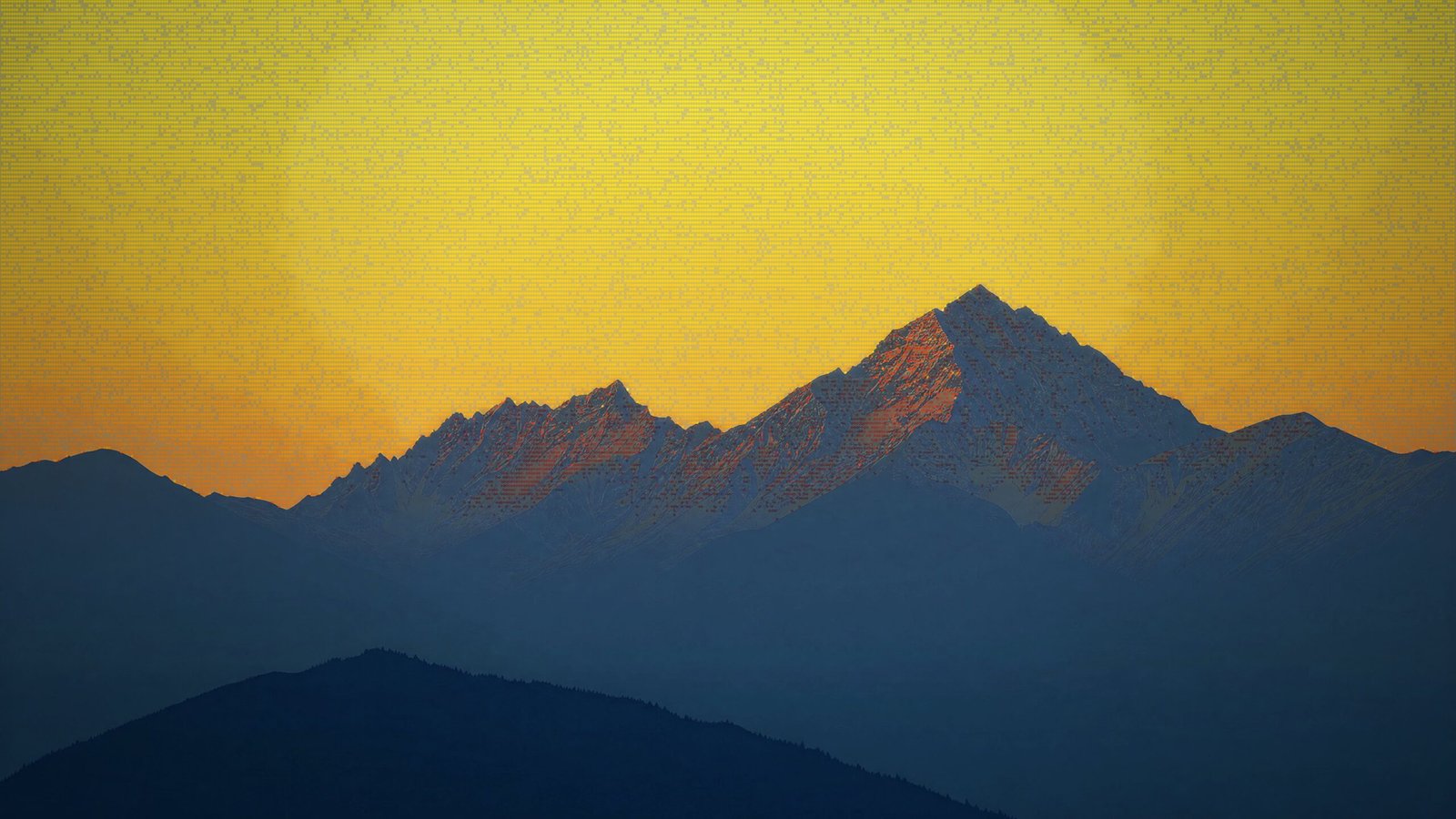
I somehow slept through the bumpy ride listening to Mazzy Star and tossing and turning on my seat. The roads were actually only rough until we crossed out of Karnataka. Tamil Nadu maintains its national highways pretty well. I woke up around 5:30am to catch the first glow of the day. It was freezing as the bus wound through the ghats. The dawn unfolded slowly in front of me. It was cloudy with patches of orange glowing on the horizon. As the bus climbed higher, the roadside fences and background mountains completely vanished from view. All I could see was the vast morning sky and the empty tarmac ahead. For a brief second, it felt as if I was ascending straight to heaven.
When we reached, the air outside was crisp and fresh. I took a few minutes to stretch out the stiffness from an eight-hour bus ride. We quickly freshened up, ate breakfast, and headed straight into Parson Valley.
About Parson Valley
Parson Valley is inside Mukurthi National Park. This park is a key piece of the broader Nilgiri Biosphere Reserve. UNESCO recognizes this entire reserve, which is actually made up of five distinct national parks:
- Bandipur National Park (Karnataka)
- Nagarhole National Park (Karnataka)
- Mudumalai National Park (Tamil Nadu)
- Mukurthi National Park (Tamil Nadu)
- Silent Valley National Park (Kerala)
The Nilgiri Biosphere Reserve is one of the most delicate ecosystems in the country. It spans three different states. It covers 2500 square kilometers in Tamil Nadu, and 1500 square kilometers each in Karnataka and Kerala.
The valley itself gets its name from Parsons, a British engineer who first explored this heavily forested region back in 1862.
Parson Valley Trek to Mukurthi Hut
Distance: 18 km
Time: Around 8 hours
Difficulty: Moderate. The trail itself is easy but its length af.
The trek starts at the Parson Valley Dam. The reservoir you see here is the primary water source for all of Ooty. This area receives heavy rainfall. All that water collects in the dam before flowing into the town. The water is so clean you can drink straight from the streams running along the trail.
The dam is an iconic spot also because the final scene of the movie Roja was filmed right here. The crew used this specific region to recreate the landscapes of Kashmir. Now that I think about it, the local pine forests make a perfect match for simulating Kashmir.
Mukurthi National Park is packed with wildlife. It is particularly famous for the Nilgiri tahr, leopards, tigers, and sloth bears. You can also find the Nilgiri langur, gaurs, Sambar deer, and colorful butterflies. The plant life here is just as diverse.
About the Shola Forests in Parson Valley
Shola forests are high-altitude tropical forests nestled in the valleys of the Southern Western Ghats. You will mostly find them across Kerala, Tamil Nadu, and Karnataka. The name comes from the Tamil word solai, meaning tropical rainforest.
Our trek guide, Mr. Rangaswamy, put it simply. He described the Shola region as a dense cluster of native plants growing between two mountains. He explained that these forests act like giant sponges and play a critical role in the local ecosystem. The deep soil absorbs heavy monsoon downpours. It then releases the water slowly throughout the entire year. This steady flow eventually feeds major South Indian rivers like the Moyar, Kaveri, Vaigai, Ponnaiyar, and Bhavani.
What I saw along the trek
The trail started after a quick introduction by our very passionate guide, Mr. Rangaswamy. He shared plenty of context about the region and its biodiversity. He even mentioned something about how the ecology here is so interconnected that the Japanese government actually helps protect it.
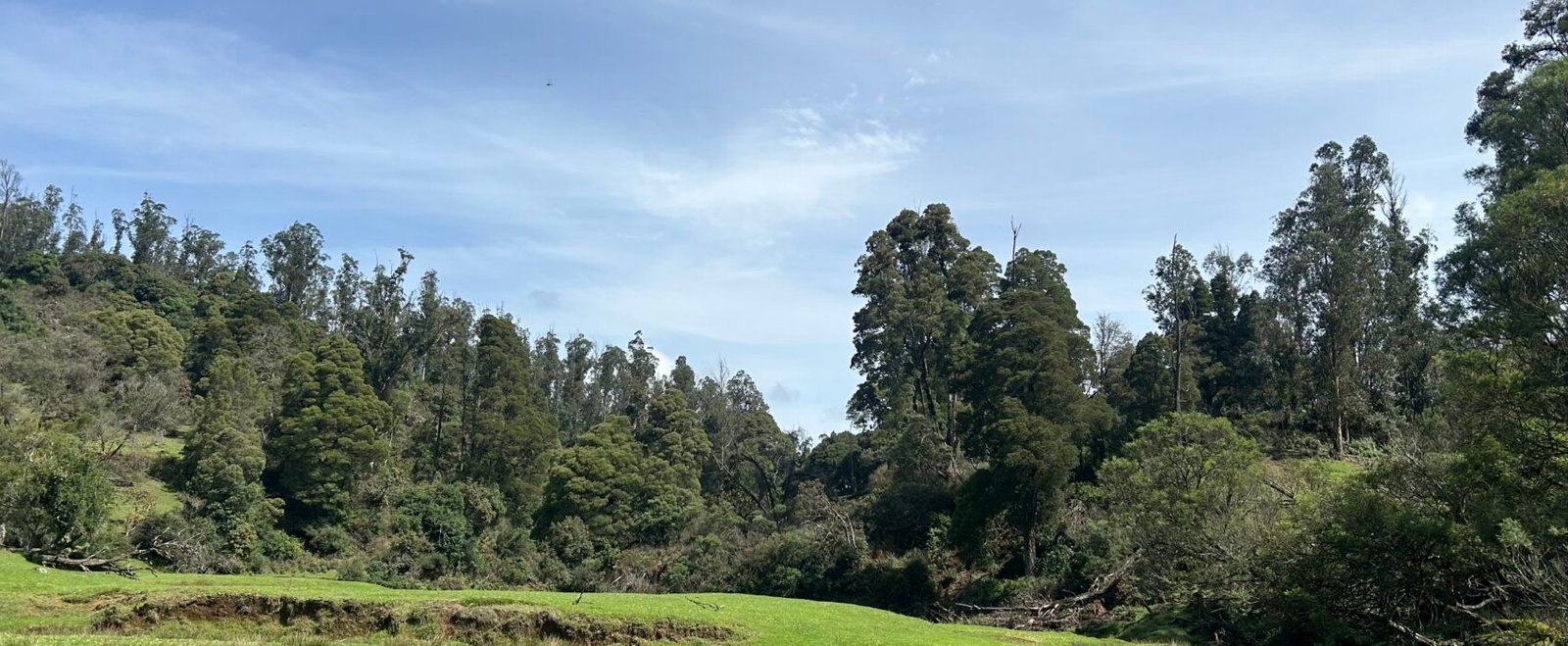
We crossed shrublands and descended into hilly grasslands. We walked past towering trees. Every inch of land held a different plant species coexisting perfectly. But there are also many invasive foreign species disrupting the local ecology. They originally arrived with the Britishers and other early explorers.
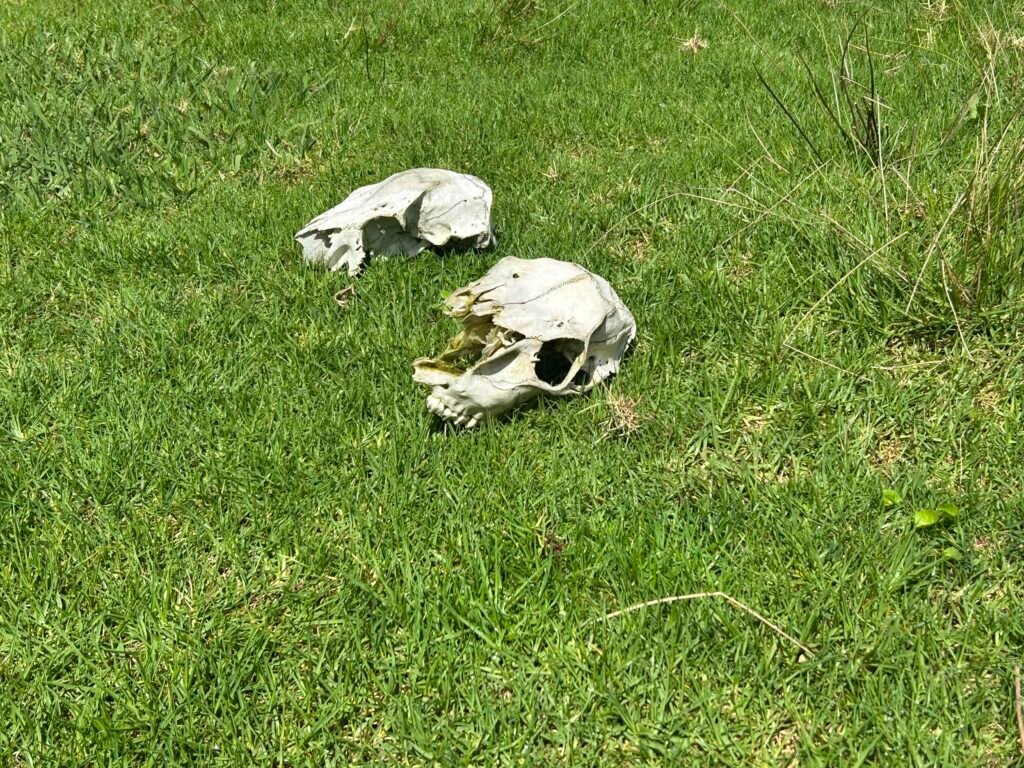
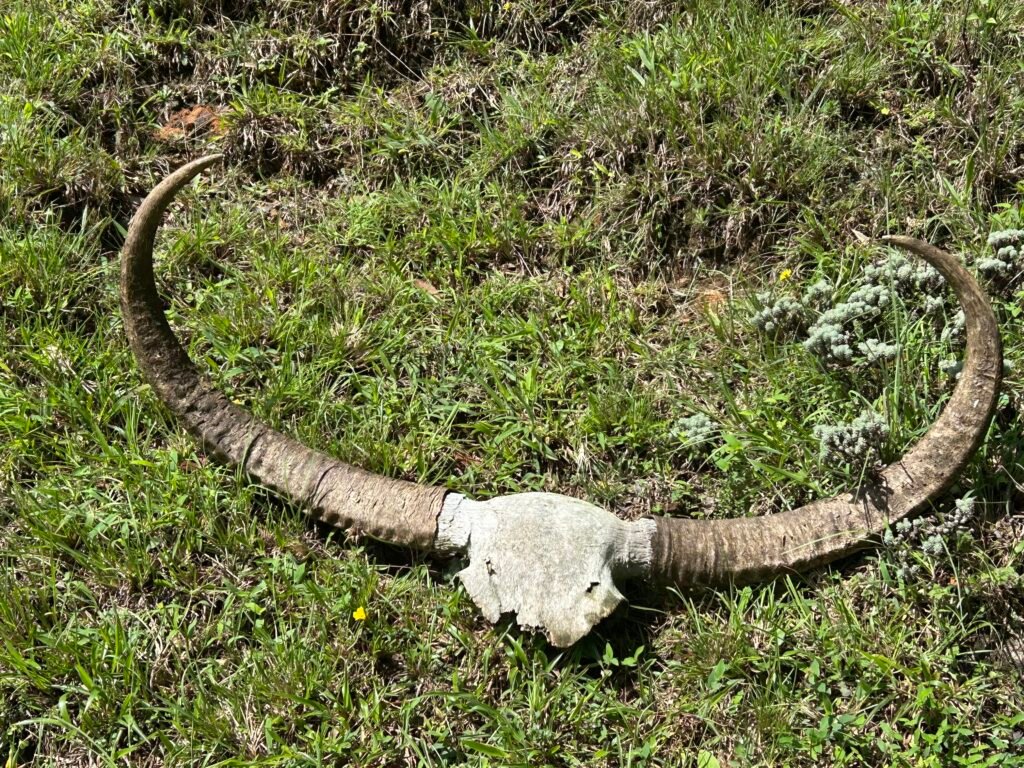
We hopped over small streams and spotted scattered animal bones. I even saw the skeletal remains of a Sambar deer. A tiger had eaten it just a few months ago.
Skull of a bull found along the trail.
We then entered the core forest area. The woods were loud with birdsongs and animal calls. We heard the Nilgiri langur and the strange, melodic scream of the Nilgiri laughingthrush. That bird literally sounds like someone laughing. This mixed with the echoing, bubbly calls of the langurs. They were probably warning each other about us. Also the sharp tak-tak from cicadas and beetles clicked constantly in the background.
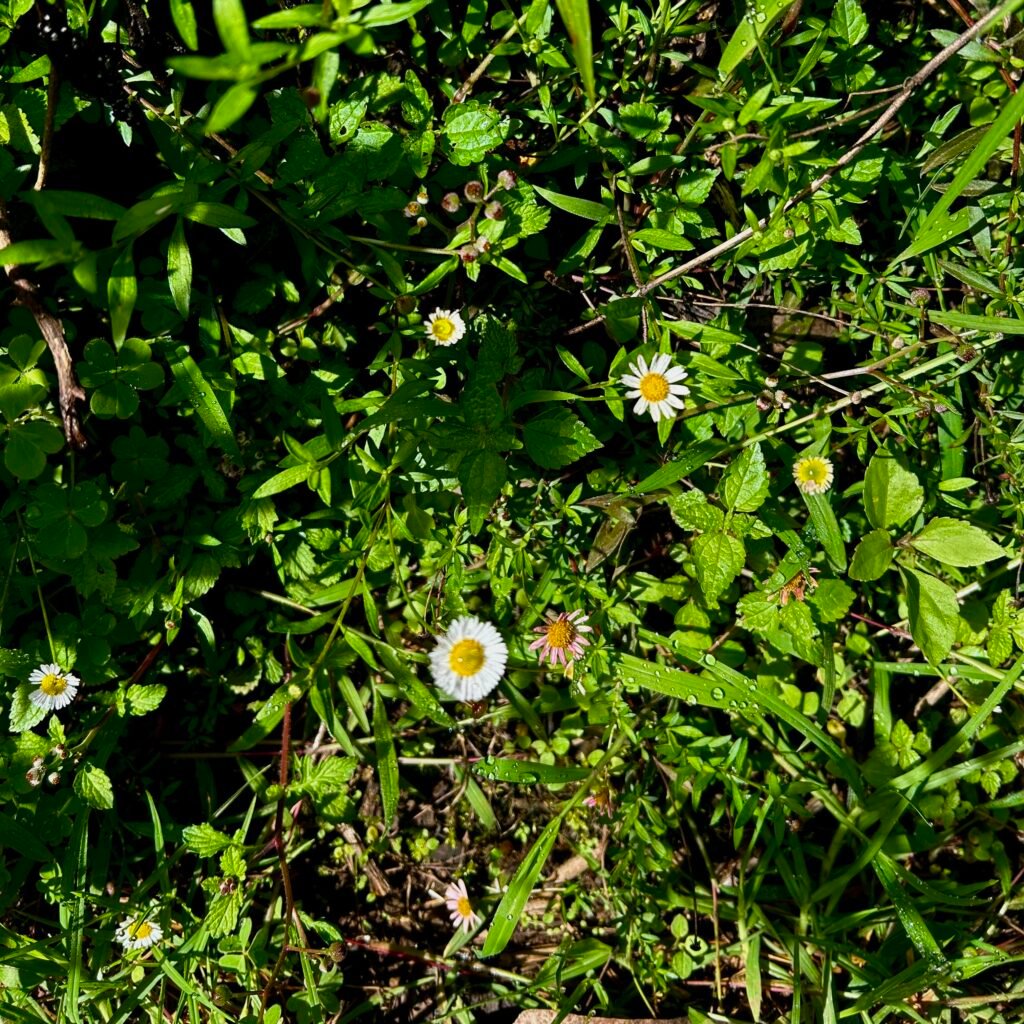
Chamomile flowers, the same plant from which Chamomile tea leaves are extracted.
Our trek guide called these BP flowers. Apparently, if people with high bloog pressure hold this with their thumb and index finger, then the petals contract.
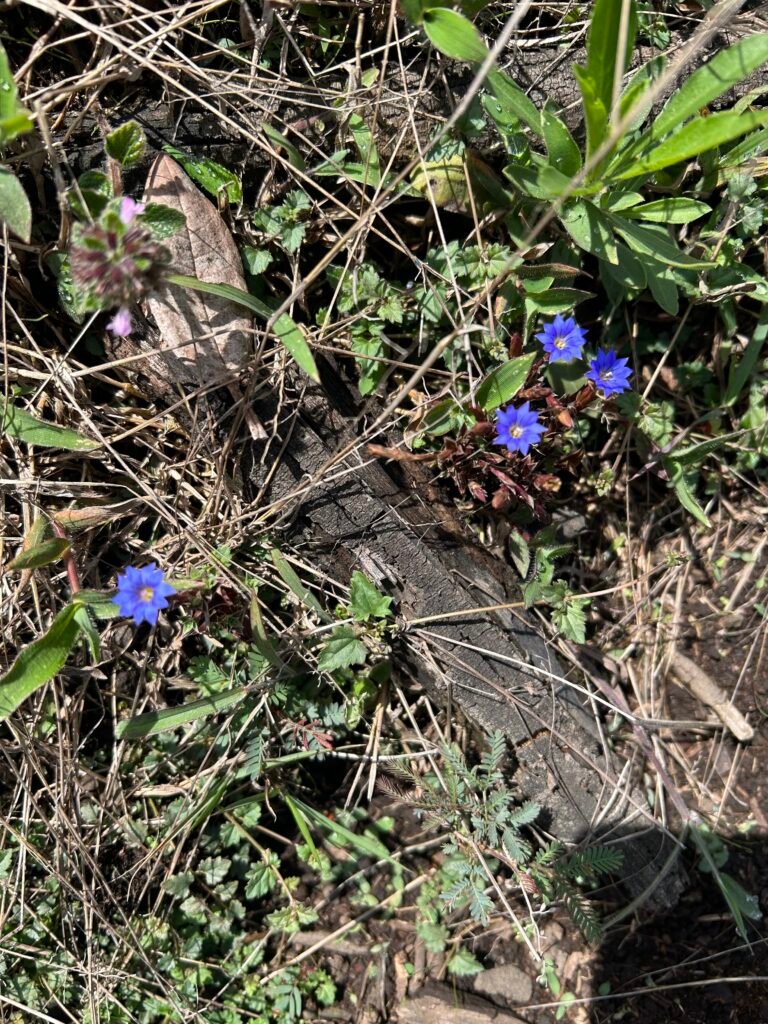
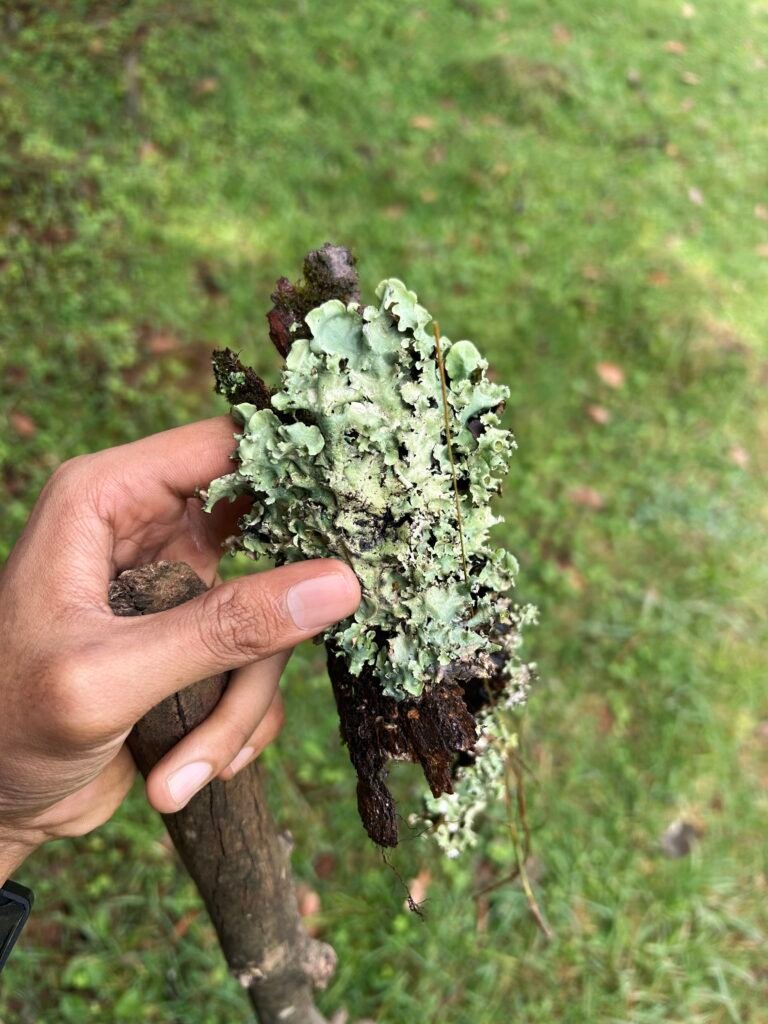
Wild edible lichen. Also called Pathar ke Phool or Dagad Phool in Marathi. It’s used locally for making biryani. In Maharashtra, it’s an ingredient in the famous Goda Masala, wheras in Andhra it’s used in the Chettinad Curries.
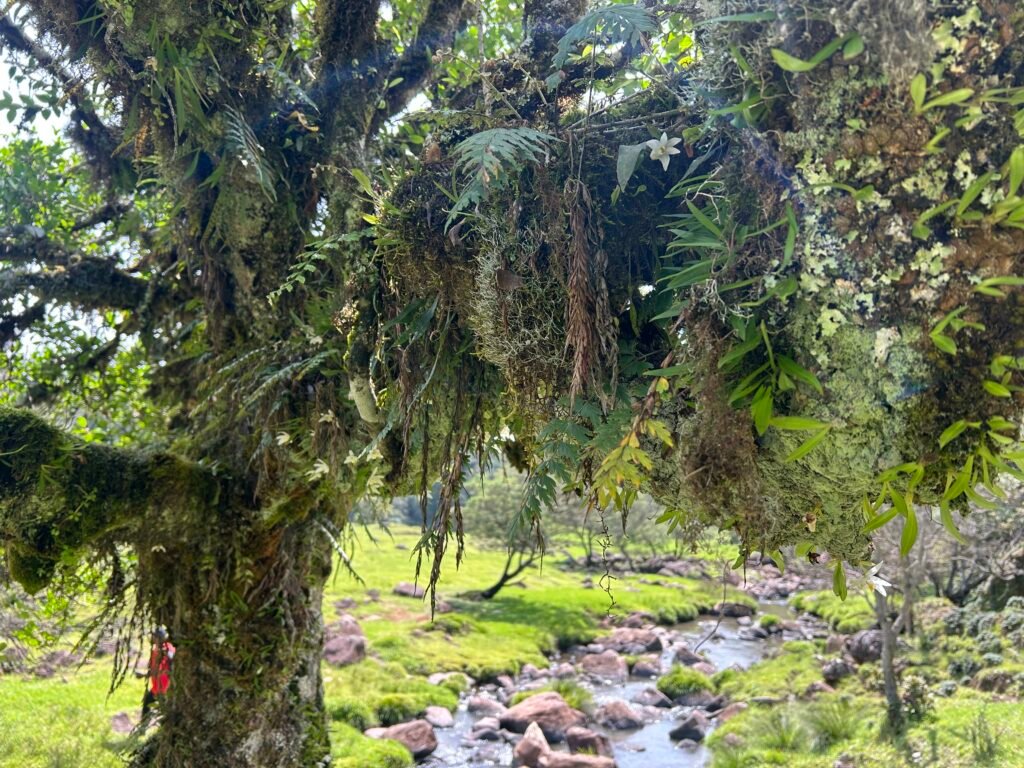
An old tree covered with orchids, ferns and creepers. It’s a sign of great health in world of trees.
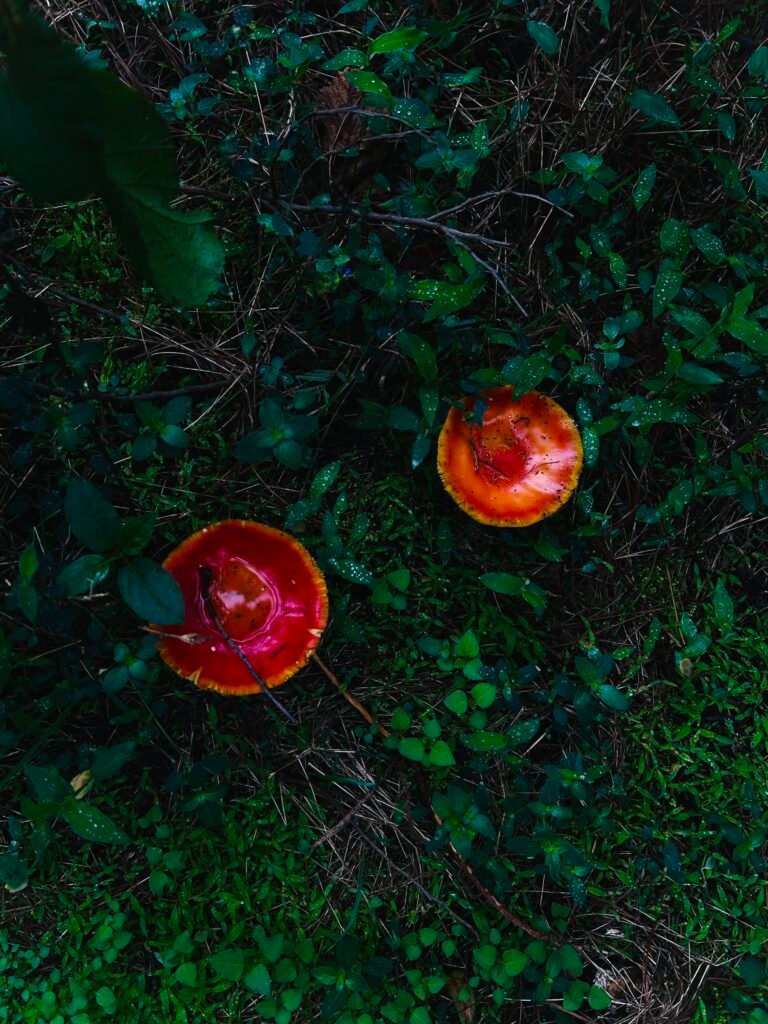
Poisonous mushrooms dotted across the trail. There was another variety of this one which was bulged downwards and looked exactly like tomatoes from far.
Our guide pointed out Brahmi leaves along the way. These medicinal herbs are used heavily in Ayurveda and apparently they boost your memory.
Massive eucalyptus trees are a common sight here. The lore says John Sullivan originally rode in from Kotagiri on horseback and planted them here. Mr. Rangaswamy explained that many plants here are invasive foreign species. They have to be uprooted to protect the native flora. Eucalyptus and pine trees are prime examples.
I also learnt about how the Britishers originally commissioned this hill station. When they arrived, they met the local Toda people and some even intermarried. Consequently, many locals converted to Christianity. We walked past a colonial era church right on the trail in the middle of the forest.
There are five indigenous tribes in this region: Todas, Kotas, Kurumbas, Irulas, and Badagas. Each tribe has a history stretching back over 3,000 years. The Todas live high up on the mountains around 2,500 meters above sea level. The other tribes spread out across the lower regions.
Further along the path, we spotted droppings from sloth bears, Sambar deer, leopards, and tigers. Some of it looked very recent. I learned that tigers mark their territory by clawing at grassy soil. You can spot these scrape marks easily. It acts as a clear warning for other animals to respect their borders. It made me realize how being territorial is a basic natural instinct. Humans do the exact same thing except that we claim territory at a psychological level too.
The trail wrapped around the mountain like a ghat road before plunging into another forested area. The sky started getting cloudy. We made it to the Mukurithi hut around 1pm. This hut is actually an abandoned guest house once owned by an Englishman named Richard Ratliff. We stopped there for our lunch break. The property is currently tied up in litigation but we took the liberty of crashing inside anyway to eat. Luckily for us, the bedroom furniture, chairs, and tables were still completely intact. The house featured classic colonial architecture with a massive fireplace and broad wooden study tables. Based on the old photos hanging on the wall, Richard Ratliff seemed like a really cool naturalist.
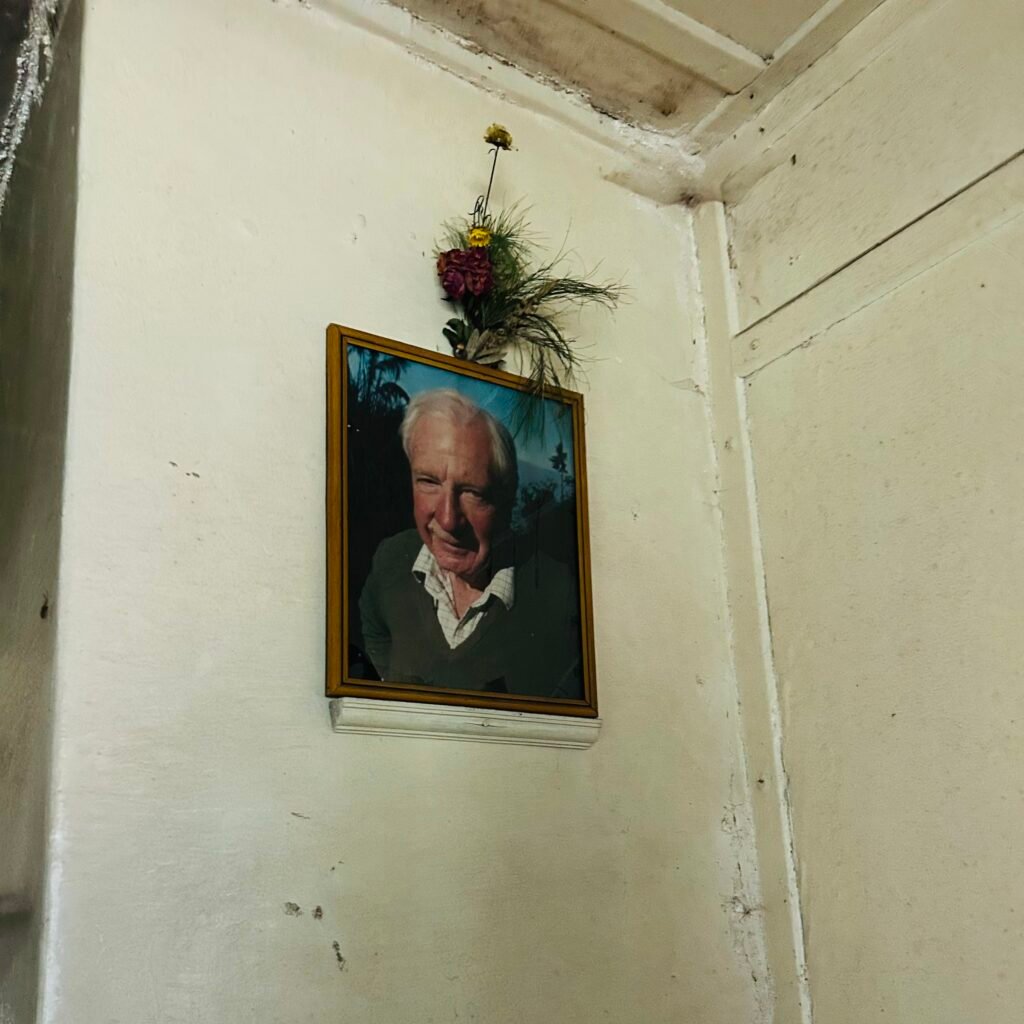
Richard Ratliff, who lived in the Mukurithi hut in the 20th century. Given the sheer beauty of this region, I would too any day choose to live here.
Views views views
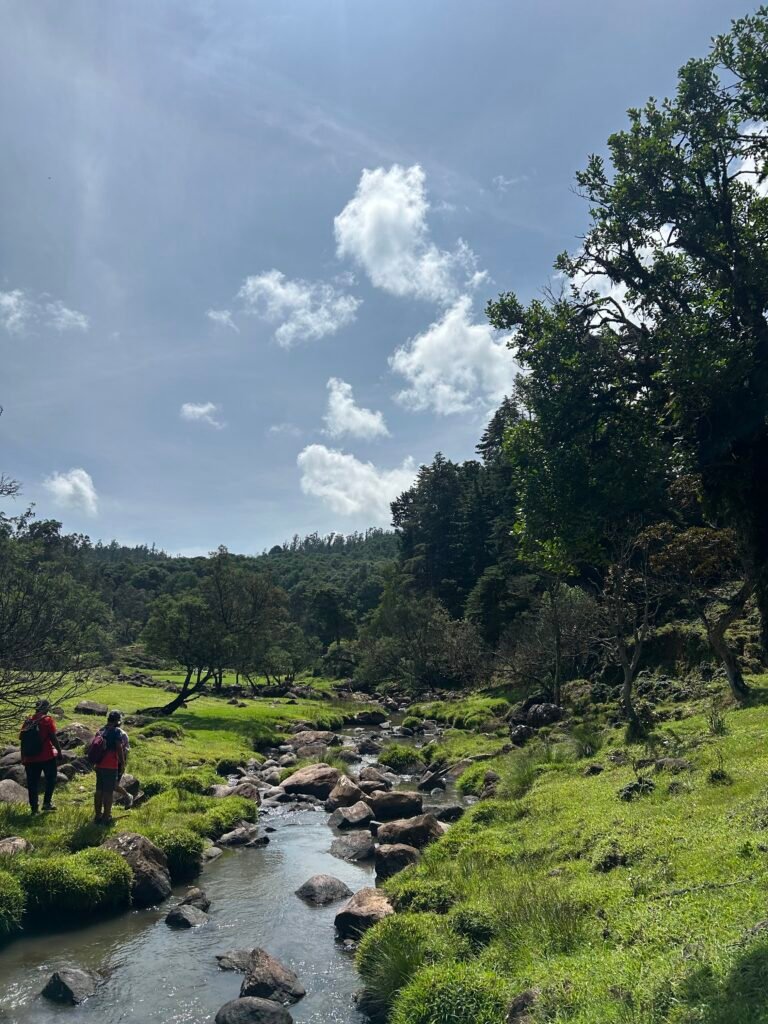
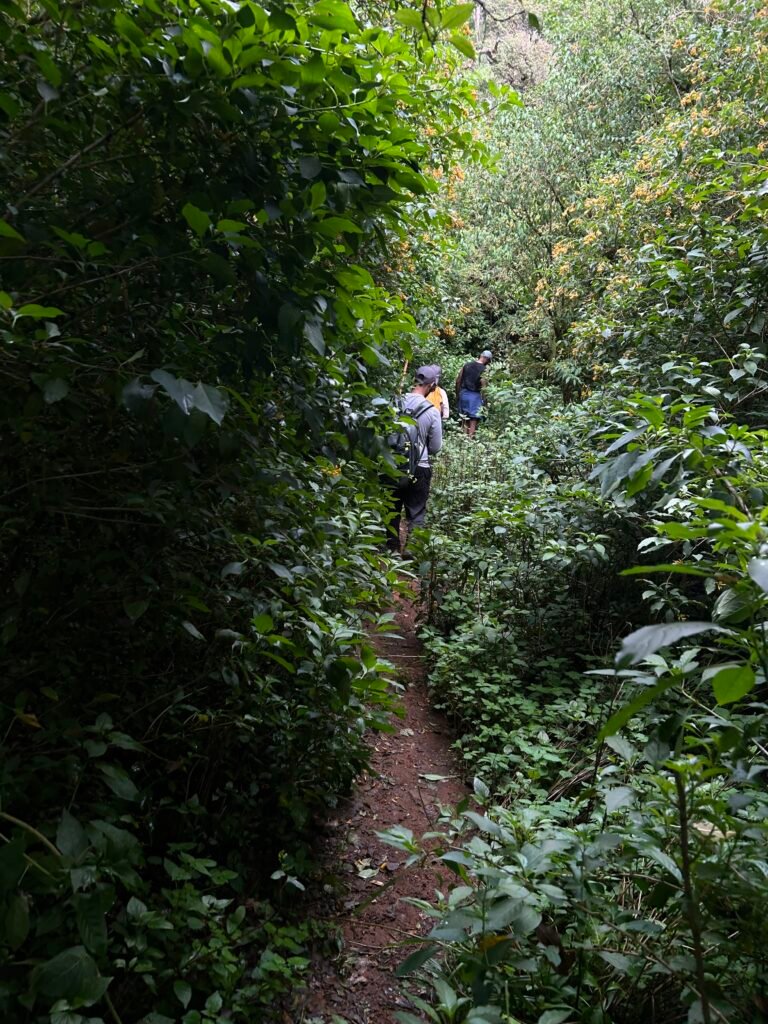
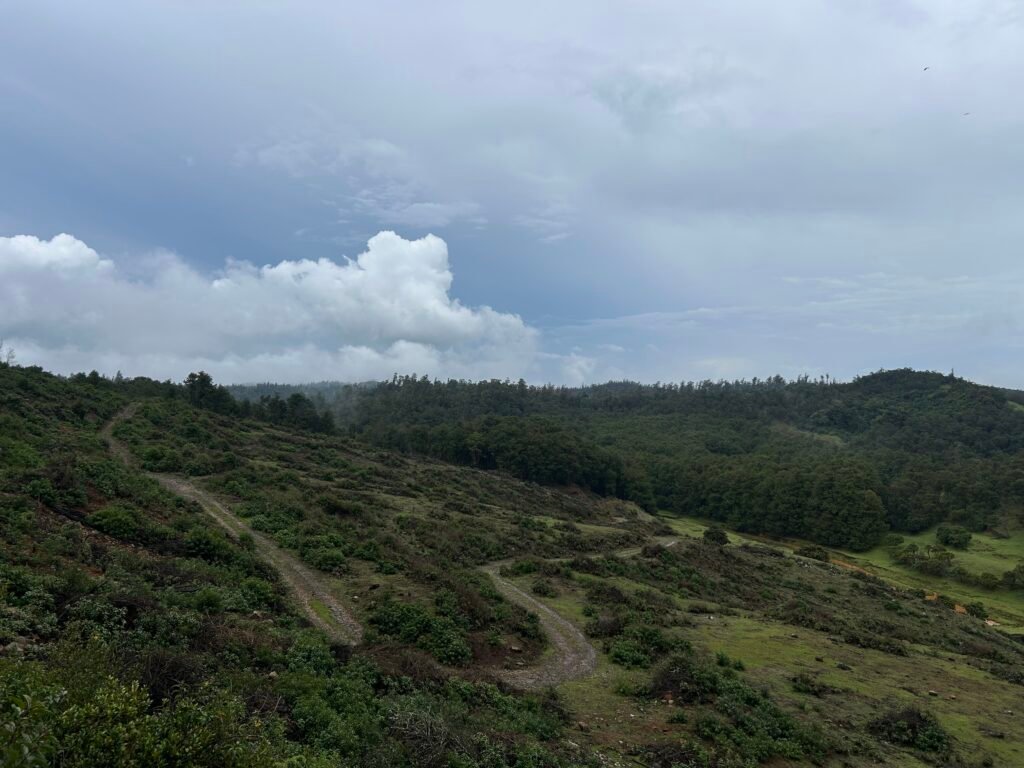
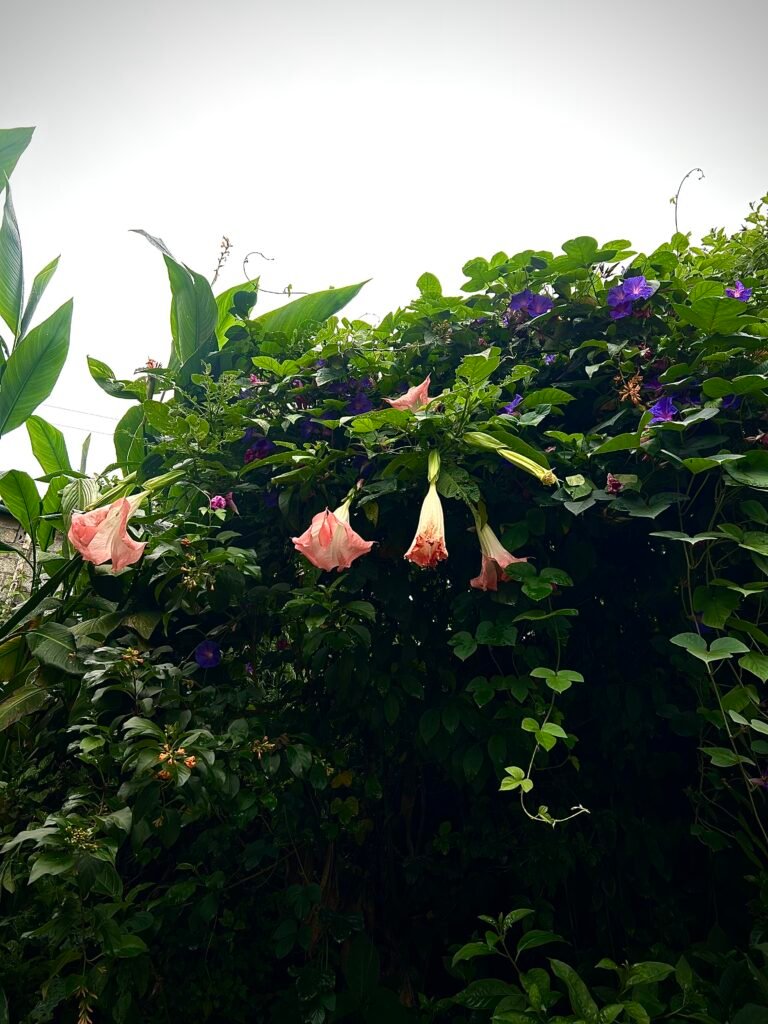
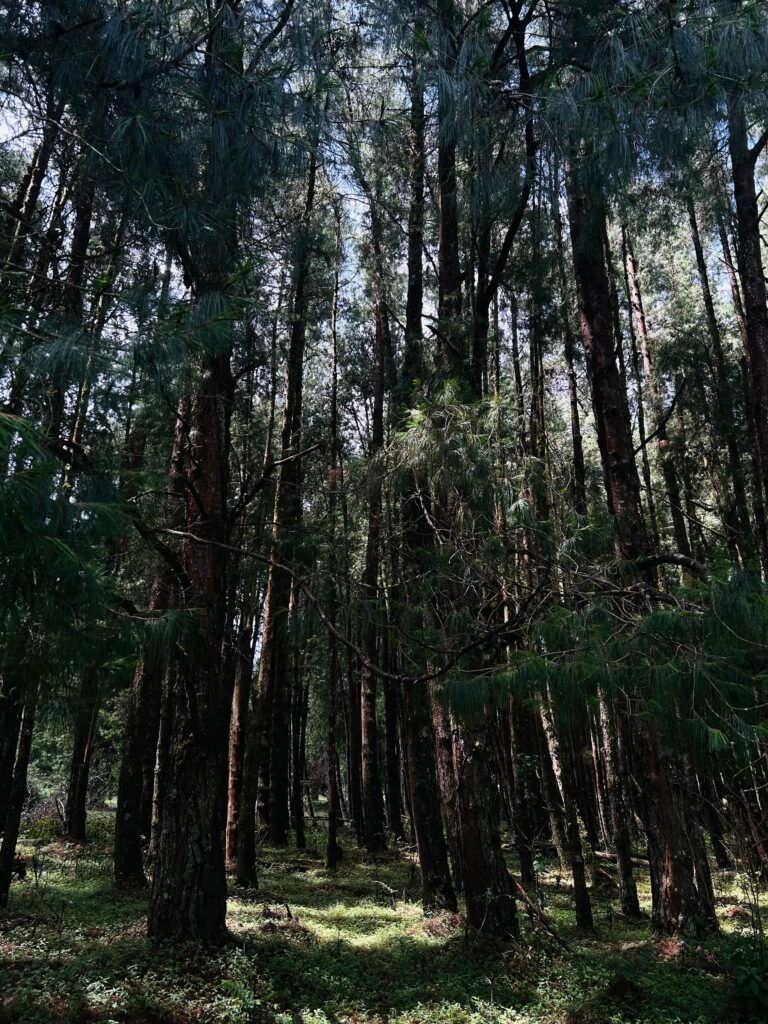
The hike back was exhausting. We had already covered almost nine kilometers. I zoned out completely and just kept walking without a break. It rained for a good half of the return trip. The initial excitement had worn off. Nobody had the energy to admire the scenery anymore. We were completely drained and just wanted to finish the trek. To me it felt almost meditative. I watched my feet move involuntarily along the dirt path. I conserved all my energy just to take the next step. I was wiped out by the time we finally made it. That last uphill stretch felt like an endless kilometer.
We reached the starting point around 4:30pm. We stopped for a chai break at a local stall. The shop was set up inside an old South Indian house. It had those slanted roofs and dim interiors with sturdy wooden tables and chairs against brightly painted walls. This place felt like it was frozen in time. It was so old world that the owner was listening to Modiji’s speech on a radio.
Overall, the trek was good fun. It is highly underrated and thanks to Mr. Rangaswamy for making us realize how crucial this reserve is. You get to see a completely different side of the Western Ghats. The trail is not as hardcore as the ones in Karnataka like Kudremukh. But it is not too basic either. It has its own unique charm. The landscape is diverse, mostly flat, and very scenic.
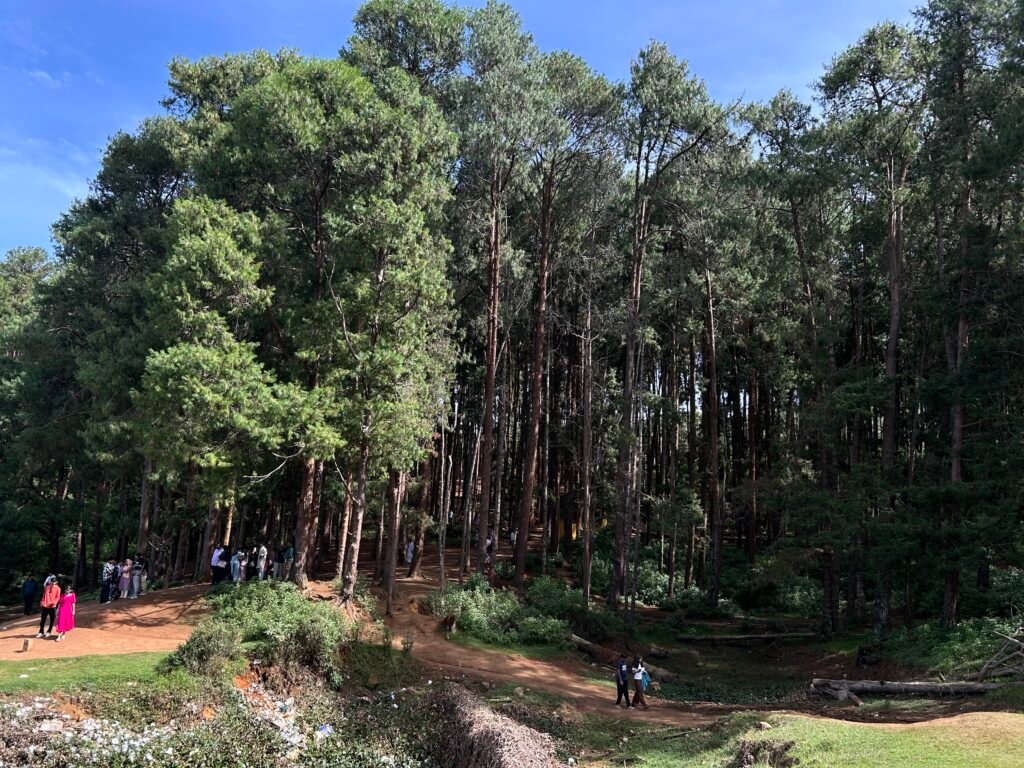
The next day we visited the Ooty Pine Forest. There’s a large lake towards the end with pine trees covering the hills on both sides. Another stop on our itinerary was Pykara Lake which we ended up skipping.
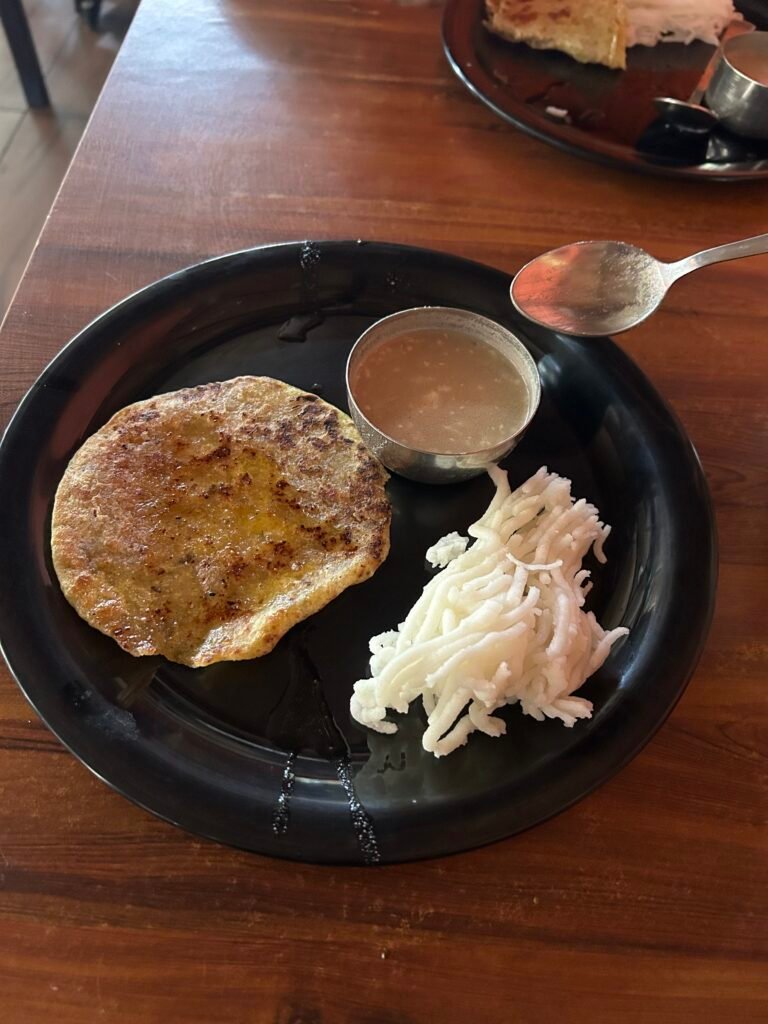
Then we set off for Bangalore. We stopped at Hotel Halli Mane near Mysore. It’s run by the same people who manage the Halli Mane in Malleshwaram.
We ordered the South Indian meals and the highlight was that, for starters, they served us coconut holige along with sweet shavige, a type of rice flour noodle, and payasam. It was quite delicious and filling.
To conclude, my love for trekking only amplified after this trip. I am even more excited for my upcoming Sandakphu trek in October. I learn so much about nature and myself every single time I hit the trail. Kudos to the Bangalore Mountaineering Company for bringing passionate people together. I can always trust them to keep things professional and smooth. Looking forward to more treks with them.
Comments