


The year has kicked off on a solid note. Just last month, I did the beach trek in Gokarna, and following that, in January I went to Coorg for the Tadiandamol trek. The last time I visited Coorg was about five years ago, just after COVID. Back then, it felt mildly pleasant, maybe because pollution levels were low and economic activity was largely subdued which also meant nature was in full bloom.
I went for the Tadiandamol trek with the Bangalore Mountaineering Club, and there were about twelve of us in the group. I boarded the bus from Richmond Town on Friday night, and by 4am on Saturday we reached Kaveri Estates. A jeep picked us up from there and took us further inside to the homestay, nestled amidst Coorg’s lush vegetation. I was one of the people standing in the cargo area of the jeep. It was damn cold and we had a sort of roller-coaster ride at the back. We got to see a sky full of stars and even a hare hopping around along the off-road trail.
We reached the homestay, which had fairly basic facilities. I spotted a big ass spider right near my bed. It definitely looked wild. We somehow managed to get rid of it, and all of us crashed for about two hours.
By 7am, we were up as per schedule and ready for breakfast. We hopped onto the jeep again and headed back to Kaveri Estate, who were providing our meals and enabling the overall experience.
It felt really good to be back in Coorg. I remember the last time I was here, I was a clumsy 20-year-old who had somehow managed to self-drive to Coorg along with his three friends.
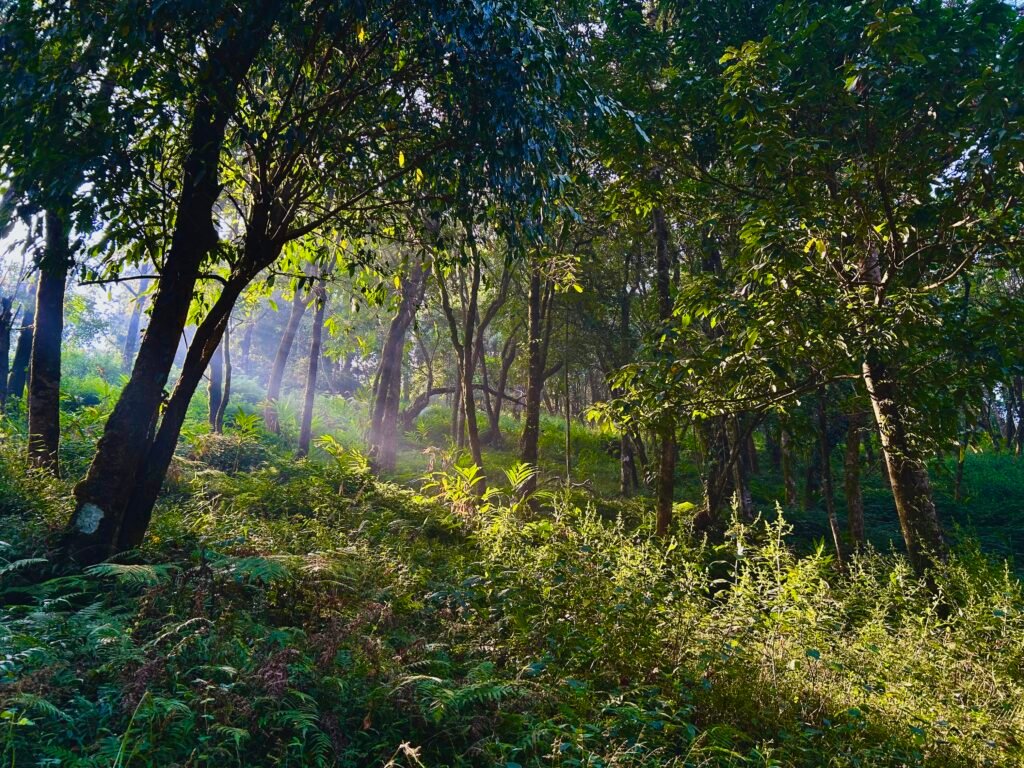
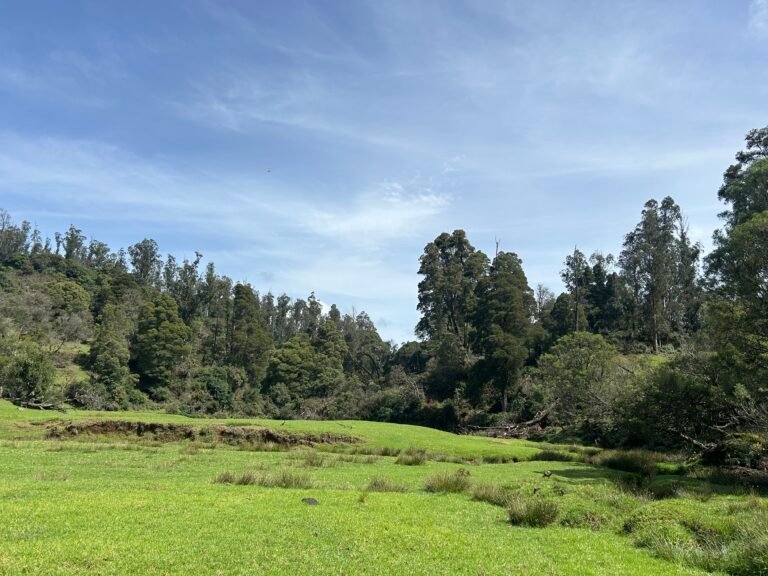
Mornings were the best part back then, and even now actually. Life seemed to be springing out of the soil everywhere. Soft sunbeams filtered through the trees, and there was a riot of green all around. Of course, parts of it existed for purely economic reasons, like coffee and areca nut plantations, but the untouched stretches felt almost ethereal. For reference, here’s what I mean –
About the Tadiandamol Trek
It’s a 7 km trail to the top (1,748m) and it’s the tallest mountain in Kodagu district and also third tallest after Mullayanagari and Baba Budan. I went in January it was wintery and dry.
The trek begins near Nalknad Palace (more on it below) and from here you have to walk about 3km to get to the forest checkpost. It’s an incline walk between trees and colourful meadows. En route we came to a spot from where we could see sun rays beaming between the trees. The sight of it was just amazing.
We reached the checkpost in about an hour. They asked for our PAN and we signed in a register which we also have to sign after we come back. While this was happening, I aksed the forest officer what does Tadiandamol mean and why is it named so? He told me that it’s actually Thadiyandamol and means fat man’s daughter where mol means daughter and Thadiya means fat dude in Malayalam. It’s similar to in kannada where we say “Dhadiya”. A fellow malayali confirmed this as well.
But some sources also say, the word is actually derived from Kodava words: Thadi (broad/large), Anda/Yenda (belonging to/mine), and Mol (hill/peak). Both might be true or one is true, I shall dig in and find out and update here.
After the checkpost, the slope gets more inclined. The initial mini forest part had birdsongs everywhere. A fellow trekker pointed out that most trees had moss and lichen on it which indicates that the air here is really pure. It’s important for the ecosystem here and there were a diverse range of trees and shrubs. There was the occasional hiss and gushing sounds from the bushes as well but I chose to stay in my lane.
As we walked, some of my fellow trekkers spoke about how, if you’re a hardcore trekker, Himalayan treks are something you must experience. Listening to them talk so passionately, I got so inspired. I even asked one of them what would be a good gateway Himalayan trek for a first-timer who is reasonably fit. He gave me two options:
1. Valley of Flowers
2. Sandakphu
I immediately added these to my bucket list.
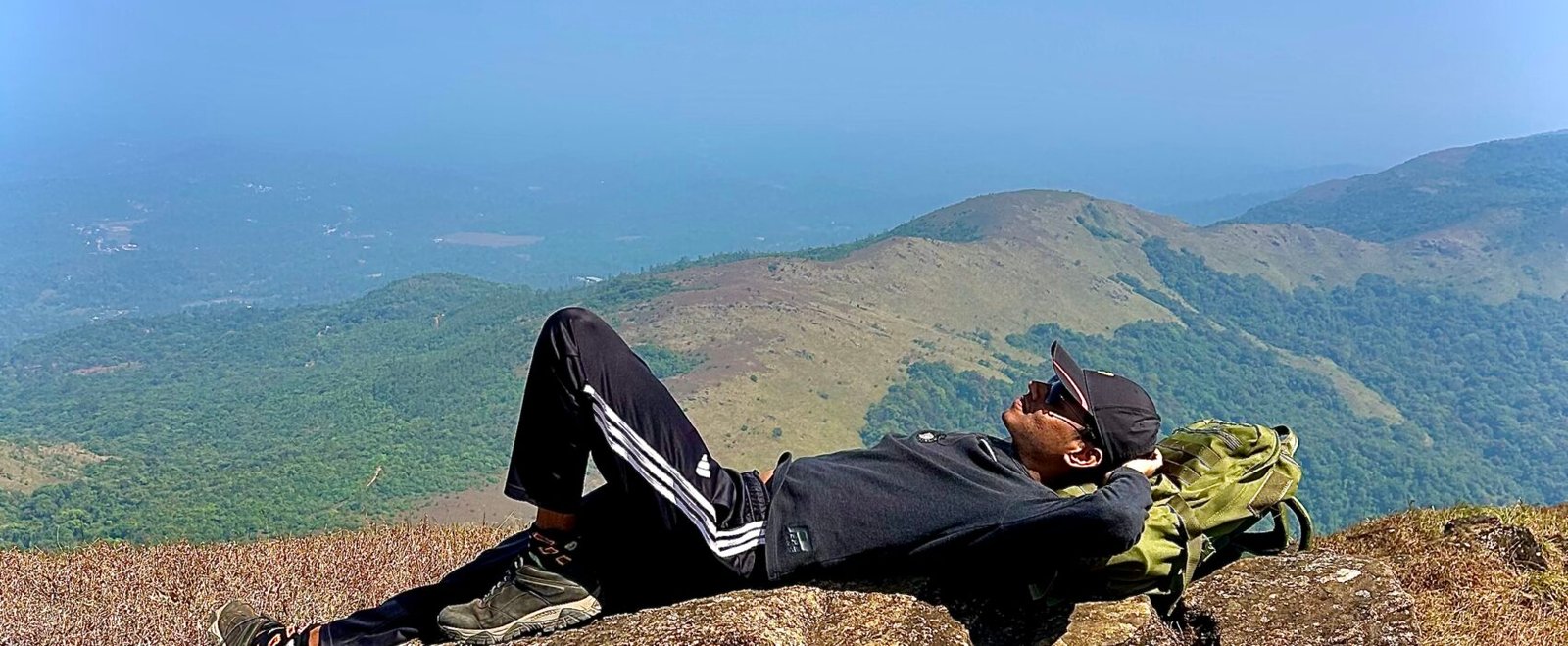
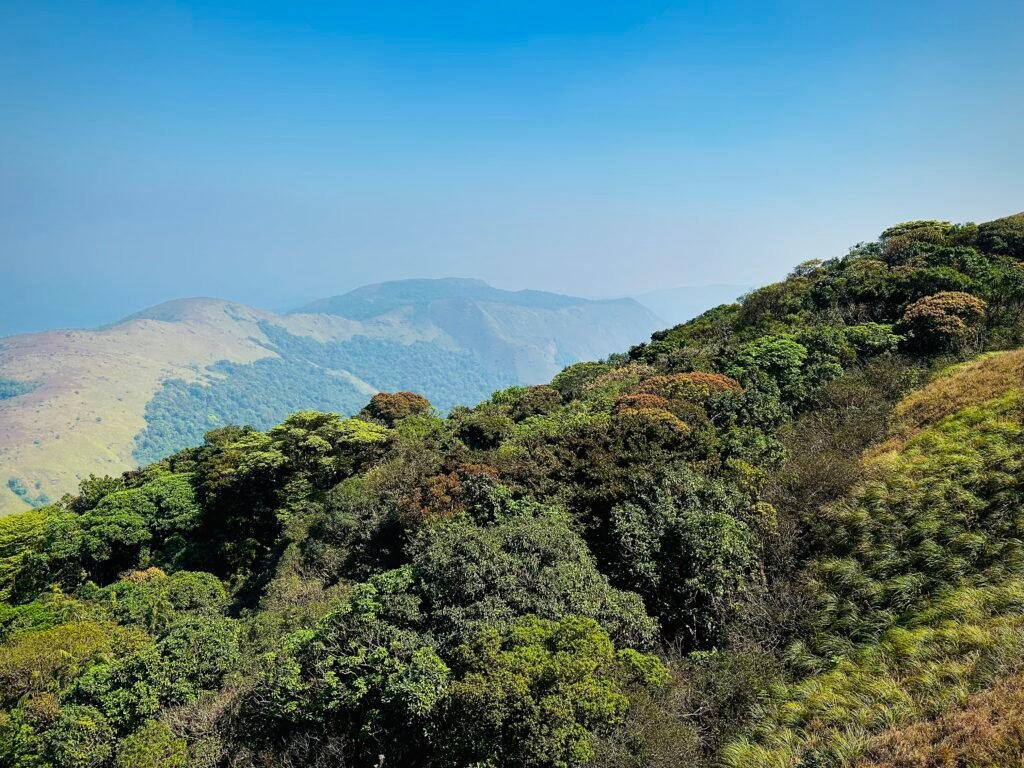
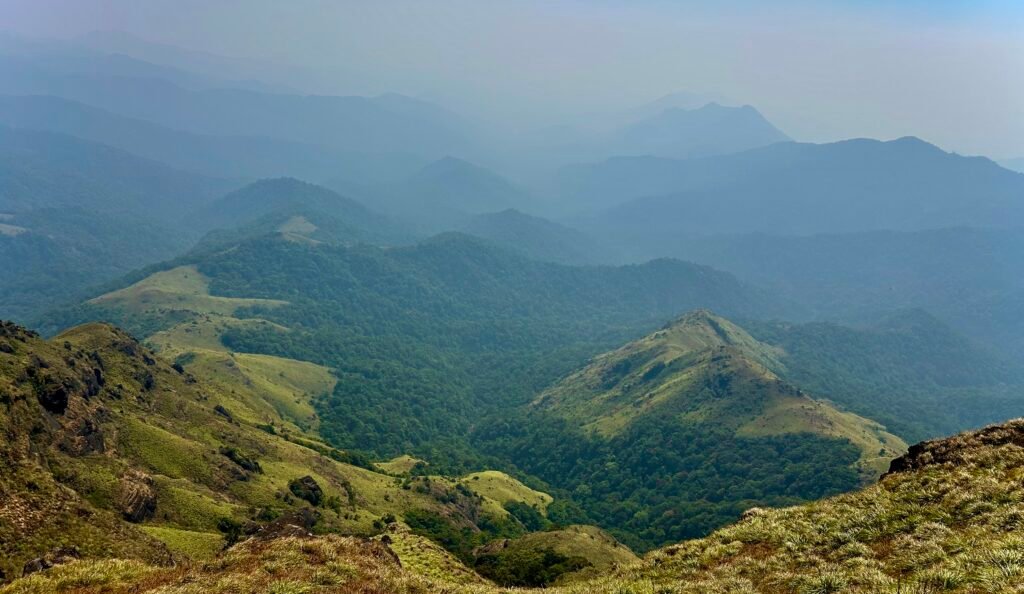
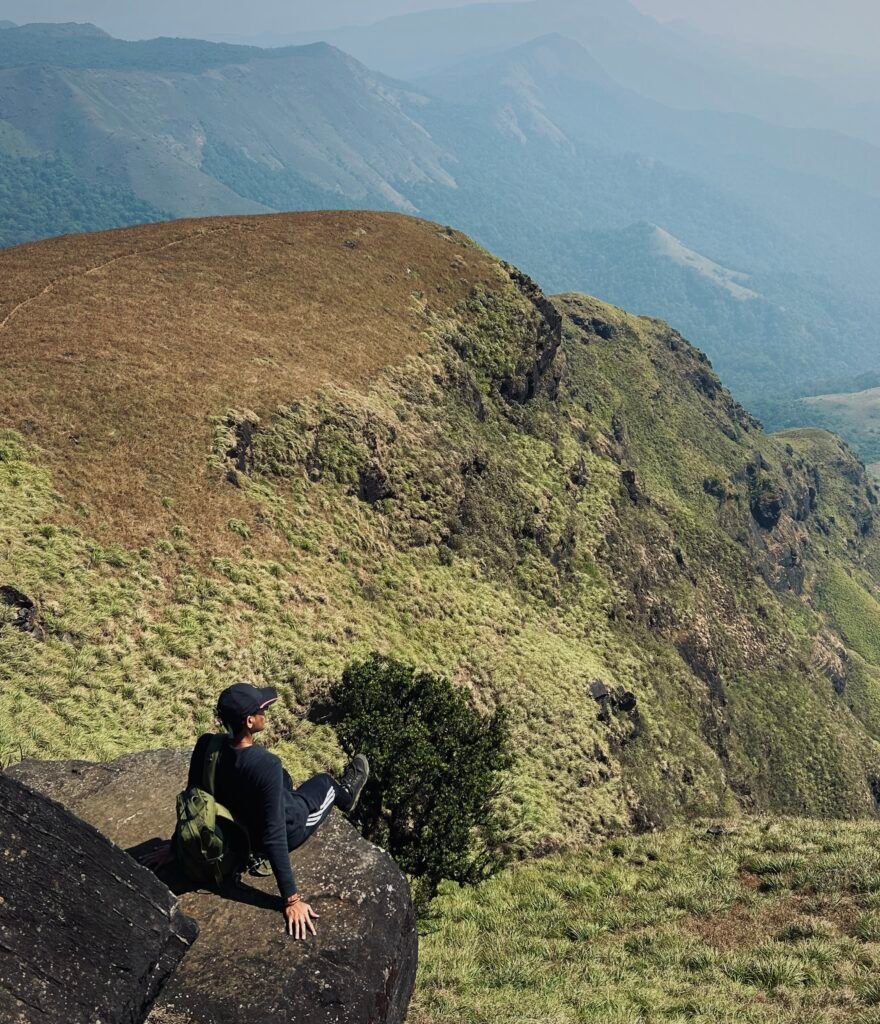
Finally we reached the top and had lunch. I tried as far I could see but it was hazy. The light shades of mountain tops kept stretching far and wide. On the top, it’s mostly grassland with black volcanic rocks to sit on.
How difficult is the trek?
If you are a regular trekker then it’s quite easy but for first-timers it might be a challenge you’ll feel good about. It’s not as intense as Western Ghat treks but more relaxed and the path to the top is well laid out.
It’s easy also because we saw a guy do the entire stretch on crocs.
I wasn’t sore after it and if you drink enough water and energize yourself properly then you are good to go.
I was actually in the mood for another trek the very next day
The views from the top –
Nalknad Palace
Built by: Doddaveerarajendra
Year: 1792
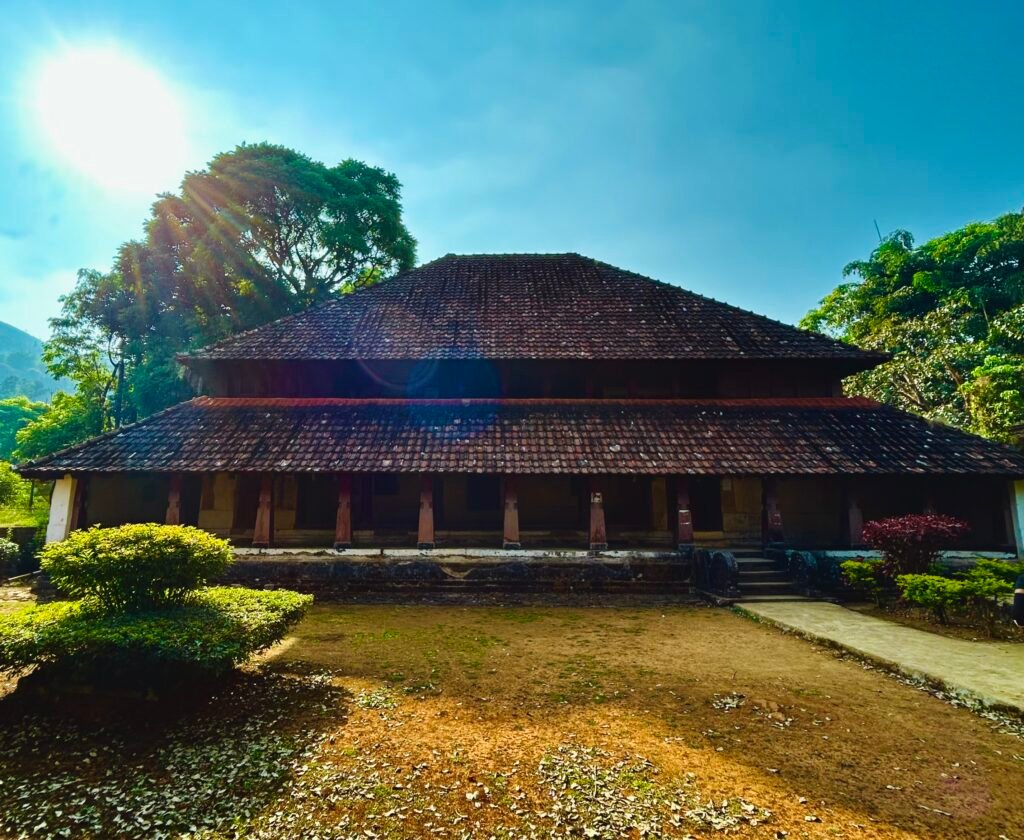
Post-trek, we visited Nalknad Palace, located at the base of the trail, right next to a government school which apparently had only 12 students.
The palace was built as a hideout for the Kodava kings, which makes perfect sense given its location in the middle of a jungle. It’s a two-storeyed structure and served as the last refuge of Chikkaveerarajendra before he surrendered to the British in 1834.
Outside, there’s a small temple-like structure with desecrated murtis on its walls. We also saw symbols representing the sun, and the outer structure had Nandi figures facing four corners. Interestingly, these weren’t the usual Nandis because their ears weren’t upright like the ones seen alongside Shiva temples. It has probably got to do with Kodava iconography because they revere cattle too.
During my trek, I came across several fascinating facts about the Kodava people. They are among the oldest tribes in India, with their earliest references found in Sangam literature dating back nearly 3,000 years. They are a martial community by tradition and they don’t follow the conventional Hindu way of life. Instead, their practices revolve around ancestral worship, the worship of river Goddess Kaveri, and their harvest deities Igguthappa and Bhagavathi. Their weddings do not involve Brahminical priests, and the community has historically been endogamous. In fact, India’s second Field Marshal, General K. M. Cariappa, was a Kodava himself.
Coming back to the palace, I honestly felt the government could have done a better job preserving it. It’s in a state of utter neglect, and given how sturdy and beautiful the architecture still is, it was quite sad to see it slowly crumbling away.
We returned from the trek to Kaveri Estates, where we stopped for a tea break along with some hot menshinkay bhajji.
On our way back, we noticed a small river stream flowing right beside our homestay. We decided to stop there and soak our feet, and honestly, it was the best decision.
The cold river water rushed past as we sat right at its edge, and the constant turbulence of the stream gave our feet a nice massage.
Day one ended with a campfire under a starlit sky. I took a moment to simply soak in the awe of it all and to top it off, I even spotted two shooting stars.
The next morning, we headed back to Bangalore, with a stop at the Golden Temple along the way.
About the Golden Temple, Coorg
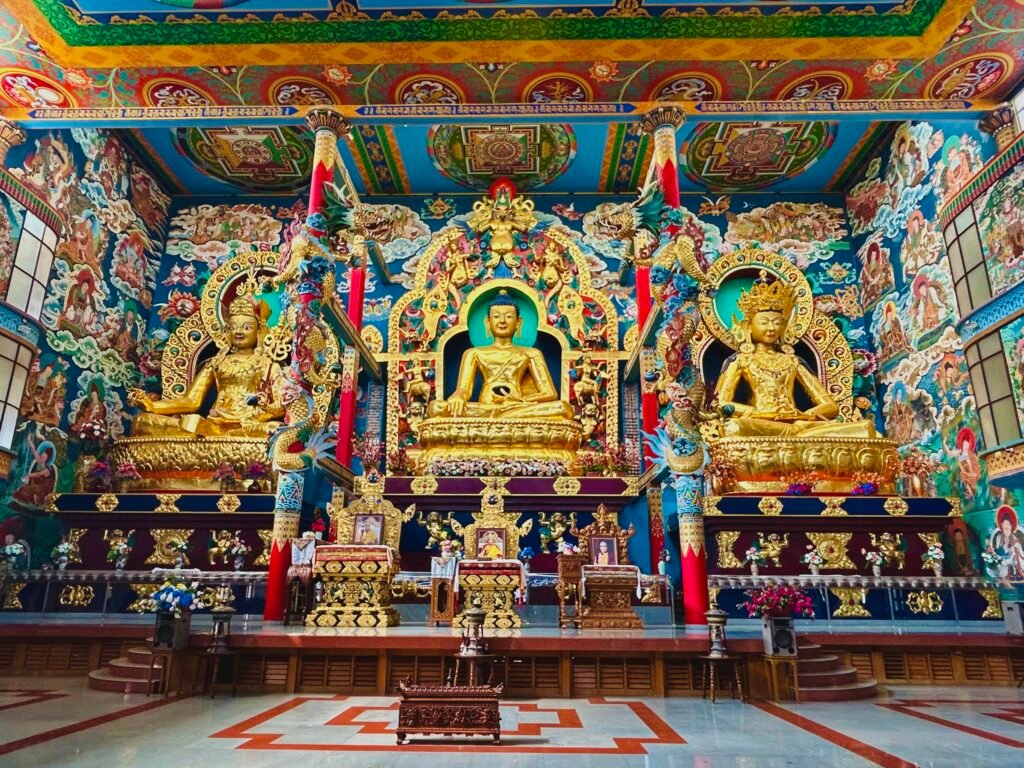
Thousands of diyas were lit at the Namdroling Monastery and the atmosphere was so serene. The monastery is part of a Tibetan settlement, and the entry is free. It was worth stopping by just to take in the sheer grandeur of the structure. The wall paintings were incredibly intricate. The yantra looking ceiling paintings were a sight to behold.
Inside, there is a massive statue of Buddha Shakyamuni, with his two disciples/emanations – Guru Padmasambhava and Buddha Amitayus on the side. We walked around for some time in the campus and then made our way back to the van to head to Bangalore.
Finally…
It was a great trek for me. I came back home with a renewed sense of purpose and a deeper desire to keep trekking. If I could, I’d love to do one every weekend, but for now, I want to aim for at least one in a month. I reached home by evening and carried on with my usual chores thinking about a Himalayan trek really soon.
Comments